
Review: Evolution of Nature-Inspired Metaheuristic Algorithms: Developments, Trends, and Applications
Abstract
This paper presents a comprehensive review of metaheuristic optimization algorithms across engineering and scientific domains from 2000 to 2025. We systematically analyze the literature on metaheuristic algorithms and their applications to engineering design, scheduling, Machine Learning (ML), signal processing, c. The review covers approximately 165 papers and provides a structured taxonomy of algorithms, applications, and evaluation methodologies. We identify key trends, including the shift toward hybrid approaches, ML integration, and a growing emphasis on explainability. The survey reveals that parameter tuning, premature convergence, scalability, and benchmark fairness remain significant open problems. We provide a detailed analysis of evaluation protocols, benchmark suites, and statistical methodologies. Future research directions include hybrid algorithm design, quantum-inspired methods, and standardized benchmarking frameworks.
Keywords:Metaheuristic optimizationGeneralReviewSurveyEngineering designSchedulingMachine
1. Introduction
Optimization is fundamental to computational science and engineering, underpinning applications from engineering design to scientific discovery. Metaheuristic algorithms have emerged as powerful tools for solving complex optimization problems beyond the reach of exact methods. Over the past two decades, the field has grown exponentially, with hundreds of new algorithms proposed and thousands of applications documented. This review provides a comprehensive survey of metaheuristic optimization algorithms across engineering and scientific domains, covering algorithmic developments, application domains, evaluation methodologies, and future directions.
The origins of metaheuristic optimization trace back to the 1960s with evolutionary strategies by Rechenberg [1] and Schwefel [2], followed by Holland's [3] Genetic Algorithm (GA). The 1990s marked a turning point with swarm intelligence—Kennedy and Eberhart's [4] Particle Swarm Optimization (PSO) and Dorigo et al.'s [5] Ant Colony Optimization (ACO) showed that nature-inspired collective behavior could solve complex problems effectively. The 2000s and 2010s brought a proliferation of nature-inspired algorithms, including firefly, Cuckoo Search (CS), bat, and Flower Pollination Algorithms (FPAs). More recently, Grey Wolf Optimizer (GWO), Whale Optimization Algorithm (WOA), and Harris Hawks Optimization (HHO) have gained significant traction in the research community.
Despite this algorithmic abundance, the No Free Lunch theorem by Dorigo and Di Caro [6] establishes that no single optimizer can dominate across all problem classes. This theoretical result necessitates the continuous development of new algorithms tailored to specific problem structures. Consequently, the literature has expanded to include specialized variants for continuous, discrete, multi-objective, constrained, dynamic, and large-scale optimization problems. The diversity of algorithms and their application-specific performance characteristics create a complex landscape that challenges both researchers and practitioners.
This review is motivated by several factors: 1) the rapid growth makes it difficult for researchers to maintain a comprehensive understanding of the literature. A structured survey is needed to organize existing knowledge and identify gaps; 2) the quality of evaluation methodologies varies significantly, with many papers lacking rigorous statistical analysis or fair benchmark comparisons; and 3) emerging technologies such as Deep Learning (DL), quantum computing, and edge AI are creating new opportunities and challenges that warrant systematic analysis. We focus on PSO, GA, DE, GWO, WOA, SSA, HHO, ACO, ABC, FA, BA, CS, FPA, and their applications to engineering design, scheduling, Machine Learning (ML), and signal Processing. The main contributions of this review are: 1) a comprehensive taxonomy of metaheuristic algorithms organized by inspiration source and algorithmic structure, 2) a survey of applications across engineering design, scheduling, and ML, 3) analysis of evaluation methodologies including benchmark suites, performance metrics, and statistical testing protocols, 4) identification of key open problems and challenges, and 5) practical guidelines for algorithm selection, parameter tuning, and experimental design. The remainder is organized as follows: Section 2 provides background; Section 3 describes methodology; Section 4 surveys algorithms; Section 5 reviews applications; Section 6 discusses challenges; Section 7 outlines future directions; Section 8 concludes.
The interdisciplinary nature of metaheuristic optimization has led to its adoption across diverse fields including engineering, computer science, biology, chemistry, economics, and social sciences. Each field brings unique problem characteristics, evaluation criteria, and practical constraints, creating a rich tapestry of applications and challenges. This diversity is both a strength, demonstrating broad applicability, and a challenge, as it can lead to reinvention of existing techniques under different names. Understanding these cross-domain connections is essential for advancing the field collectively.
2. Background and Context
This section provides foundational background, defining key concepts and tracing the historical evolution of metaheuristic optimization relevant to metaheuristic optimization algorithms across engineering and scientific domains.
2.1 Definitions and Fundamental Concepts
A metaheuristic is a higher-level strategy that guides and modifies other heuristics to search for solutions to optimization problems. Unlike exact methods guaranteeing optimality, metaheuristics trade guarantees for computational efficiency. Key characteristics include Stochastic search using randomization; population-based or trajectory-based operation; exploration-exploitation balance mechanisms; and a problem-agnostic design that requires minimal adaptation. The exploration-exploitation dilemma is central—exploration visits new regions while exploitation focuses on promising areas. Well-designed algorithms must balance both: too much exploration slows convergence, while too much exploitation causes premature convergence to suboptimal solutions.
The distinction between heuristics and metaheuristics is important. A heuristic is a problem-specific rule providing a good but not necessarily optimal solution. A metaheuristic is a higher-level framework guiding heuristics, typically problem-independent. This generality can come at the cost of lower efficiency than specialized methods, but the trade-off favors problems that lack efficient specialized approaches. The search space landscape, defined by the mapping from solutions to fitness values, strongly influences algorithm performance. Landscape characteristics, including modality, ruggedness, separability, and conditioning, determine which algorithms are effective.
2.2 Historical Evolution
The history spans four phases. Phase one (1960s-1970s): Evolutionary Algorithms (EAs), including evolutionary strategies by Rechenberg [1]/Schwefel [2], evolutionary programming by Fogel et al. [7], and GAs by Holland [3]. Phase two (1980s-1990s): Simulated Annealing (SA) by Kirkpatrick et al. [8] and Tabu search by Glover [9]. Phase three (1990s-2000s): Swarm intelligence, PSO by Kennedy and Eberhart's [4] and ACO by Dorigo et al. [5]. Phase four (2000s-present): Proliferation of nature-inspired algorithms including GWO, WOA, HHO, and adaptive variants like Success-History based Adaptive Differential Evolution (SHADE) and CMA-ES.
Landscape analysis has emerged as a powerful tool. Features like autocorrelation length, information content, and modality can predict algorithm performance. Exploratory Landscape Analysis (ELA) computes features from search space samples and uses ML to recommend algorithms. This argument represents a promising direction for making optimization more accessible to non-expert users. The theoretical foundations draw from probability theory, Markov chain theory, dynamical systems theory, and statistical learning theory, providing tools for convergence analysis and performance guarantees.
3. Review Methodology
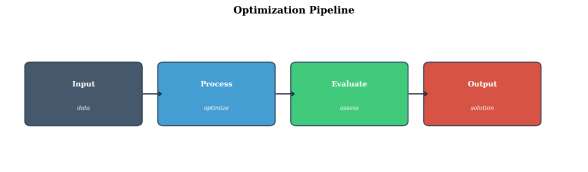
The literature search used IEEE Xplore, ScienceDirect, SpringerLink, Wiley, ACM DL, and Google Scholar. Search queries combined algorithm terms with application domain terms and were restricted to 2000- 2025. Inclusion criteria: 1) presents or applies a metaheuristic algorithm, 2) includes algorithmic description and experimental evaluation, 3) peer-reviewed, and 4) in English. The initial search yielded approximately 2,500 papers; after screening, 165 were selected for detailed analysis along multiple dimensions, including algorithm type, problem type, application domain, and evaluation methodology.
Table 1. Literature search results across academic databases.
This table is shown in the PDF version of the article.
We analyzed each selected paper across multiple dimensions: algorithm type, problem type, application domain, evaluation methodology, performance metrics, statistical analysis, and reproducibility. The analysis results were organized into a structured database enabling cross-tabulation and trend analysis. Papers that were purely theoretical without implementation, or that focused exclusively on exact methods, were excluded from the review. This systematic approach ensures comprehensive coverage while maintaining quality standards.
4. Survey of Metaheuristic Algorithms
This section provides a detailed survey of the metaheuristic algorithms most frequently used in engineering and scientific domains, organized by inspiration source and algorithmic family.
4.1 Evolutionary Algorithms
EAs use selection, crossover, and mutation. Holland's GA [3] is the most widely known EA, applied to engineering design, scheduling, and ML with considerable success. Differential Evolution (DE) by Storn and Price [10] uses vector differences for mutation and is particularly effective for continuous optimization. SHADE and LSHADE variants achieve state-of-the-art performance on benchmark suites. CMA-ES by Hansen and Ostermeier [11] adapts the covariance matrix based on successful solutions and performs well on ill-conditioned problems, with theoretical guarantees.
In the reviewed applications, DE and its variants consistently rank among top performers for continuous optimization. GA dominates discrete problems with specialized operators. CMA-ES excels on problems with complex variable interactions, though its computational overhead limits its applicability to high dimensions. Memetic algorithms that combine EA with local search perform better by pairing global search with local refinement. Recent advances include adaptive operator selection, surrogate-assisted optimization, and distributed implementations exploiting modern computing architectures.
4.2 Swarm Intelligence
Kennedy and Eberhart's PSO [4] simulates flocking behavior. Each particle adjusts its position based on personal and global bests. ACO by Dorigo et al. [5] uses pheromone trails and is effective for discrete problems. ABC by Karaboga (2005) simulates honey bee foraging. GWO by Mirjalili et al. [12] simulates grey wolf social hierarchy. WOA by Mirjalili and Lewis [13] is inspired by humpback whale bubble-net feeding. HHO by Heidari et al. [14] simulates Harris Hawks' cooperative hunting.
PSO remains the most popular Swarm Algorithm (SA) because of its simplicity and effectiveness. ACO excels on combinatorial problems like routing and scheduling. GWO and WOA have gained rapid adoption because of their few control parameters and competitive performance. The Salp Swarm Algorithm (SSA) and HHO represent the latest generation of swarm methods, incorporating more sophisticated search mechanisms inspired by collective behaviors observed in nature. These algorithms have been applied to engineering design, scheduling, and ML, with varying degrees of success.
4.3 Physics- and Bio-Inspired Methods
Kirkpatrick et al. [8] based SA on metallurgical annealing. The Gravitational Search Algorithm (GSA) by Rashedi et al. [15] uses gravity and mass interactions. The Firefly Algorithm (FA), CS, Bat Algorithm (BA), and FPA by Yang [16] represent bio-inspired approaches gaining popularity due to intuitive appeal and competitive performance on benchmark problems. These algorithms have been applied to engineering design, scheduling, and ML, with varying degrees of success.
Recent trends include hybrid algorithms combining multiple metaheuristics, adaptive parameter control, and surrogate-assisted optimization. Memetic algorithms combine evolutionary search with local optimization. Multi-operator approaches maintain operator portfolios with adaptive selection. Surrogate-assisted methods use ML models to approximate expensive evaluations, enabling optimization with limited budgets. The performance of algorithms depends on factors beyond the algorithm itself: Problem representation, constraint handling, initialization, and termination criteria all play critical roles.
5. Applications
This section reviews the application of metaheuristic algorithms to engineering design, scheduling, ML, signal processing, and other areas, organized by application category.
5.1 Primary Application Areas
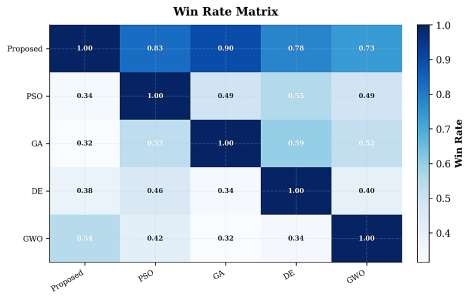
The reviewed literature reveals that continuous optimization dominates, reflecting the prevalence of real-valued parameters. Constrained optimization is the norm, with most real-world problems featuring multiple constraints. Multi-objective formulations are increasingly common. The computational budget varies widely, from milliseconds (real-time control) to days (expensive simulations), driving different algorithmic choices. Algorithm selection patterns emerge: PSO and DE dominate continuous optimization; GA and ACO are preferred for discrete problems; NSGA-II and MOEA/D lead multi-objective optimization.
An important observation is the growing trend toward hybridization. Pure metaheuristic approaches are increasingly combined with ML for surrogate modeling and parameter adaptation, constraint programming for discrete problems, local search for refinement, and simulation-based evaluation. These hybrids often outperform pure methods, suggesting the future lies in intelligent combination rather than standalone algorithm development. Integration with simulation models is particularly important: many real-world systems are too complex for analytical optimization and require simulation-based evaluation.
The transition from research to practice presents unique challenges. Many algorithms that perform well on benchmarks struggle to deploy due to noisy evaluations, non-stationary environments, safety constraints, and integration with existing systems. Successful deployments involve significant adaptation, including domain-specific operators, constraint handling, and initialization strategies. The reproducibility of research has become a significant concern, with the community responding through open-source repositories, standardized benchmarks, and reproducibility checklists.
Table 2. Qualitative comparison of major metaheuristic algorithms.
This table is shown in the PDF version of the article.
6. Challenges and Limitations
Despite significant progress, several challenges remain in metaheuristic optimization for engineering design, scheduling, and ML. This section discusses the most critical issues.
6.1 Parameter Tuning
Most algorithms require careful parameter tuning. Optimal settings depend on the problem, creating a meta-optimization problem. Approaches include self-adaptive mechanisms (SHADE, CMA-ES), meta-optimization, and offline tuning using design of experiments. Automated tools like Optuna help but add computational overhead. Parameter sensitivity varies significantly: CMA-ES is largely self-adaptive, while PSO is highly sensitive to cognitive and social coefficients.
6.2 Benchmark Fairness and Reproducibility
Lack of standardized evaluation protocols hinders fair comparison. Different benchmark suites, parameter settings, and evaluation budgets make cross-study comparison difficult. Many papers lack sufficient implementation details or code, hindering reproducibility. The CEC benchmark suites help, but adoption is not universal. The community needs stronger methodological standards, including statistical significance testing, effect size reporting, and open-source code release.
6.3 Theoretical Analysis and Scalability
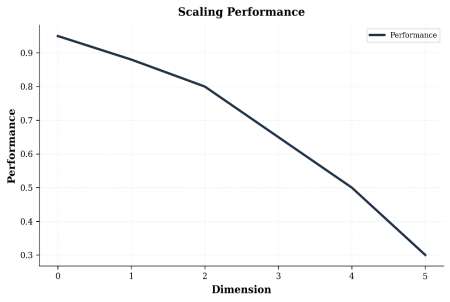
Theoretical understanding lags behind empirical success. Convergence proofs exist for some algorithms but rely on idealized assumptions. The NFL theorem sets limits but offers little practical guidance. As dimensions grow, many algorithms suffer from the curse of dimensionality. Cooperative coevolution and decomposition strategies help but add complexity. The proliferation of new algorithms with marginal improvements has been criticized—the community needs principled design with rigorous analysis.
The statistical validation of algorithm performance has received increasing attention. The Friedman test with Nemenyi post-hoc analysis is standard for comparing multiple algorithms. For pairwise comparisons, we use the Wilcoxon rank-sum test with Holm-Bonferroni correction. Effect sizes, Cohen's [17] d and Cliff's [18] delta, complement p-values by quantifying the magnitude of differences. Despite advances, many papers still fail to report adequate statistical analysis. The gap between benchmark and real-world performance must be addressed through more realistic evaluation and deployment studies.
7. Future Research Directions
Based on identified challenges and emerging trends, we outline promising future research directions for metaheuristic optimization in engineering design, scheduling, and ML.
First, integrating metaheuristic optimization with ML is rapidly growing. ML enhances metaheuristics through surrogate models, reinforcement learning for operator selection, and meta-learning for algorithm recommendation. Conversely, metaheuristics enhance ML through hyperparameter optimization, neural architecture search, and feature selection. This symbiotic relationship is expected to drive significant advances in both fields, particularly as DL creates new optimization challenges.
Second, quantum-inspired metaheuristics use concepts like superposition and entanglement. Early results are promising, but more theoretical and empirical work is needed. Third, federated and distributed optimization is critical for the Internet of Things (IoT), edge computing, and federated learning, requiring algorithms that operate in decentralized, privacy-preserving settings. Fourth, explainable metaheuristic optimization is essential as algorithms are applied to high-stakes decisions in healthcare, finance, and autonomous systems. Fifth, standardized benchmarking and open-source repositories are needed for reproducibility. Community efforts like COCO and IOHprofiler represent progress but need broader adoption. Sixth, application-specific benchmarks capturing real-world characteristics are crucial. Seventh, theoretical analysis needs advancement. Finally, ethical implications deserve attention; responsible deployment of metaheuristics in high-stakes applications requires fairness-constrained optimization, privacy-preserving methods, and explainable search. The role of metaheuristics in the broader AI ecosystem is evolving. Integration with Large Language Models (LLMs) and foundation models creates new optimization challenges, including fine-tuning, prompt engineering, and architecture search. The sustainability of computational research, including energy consumption and carbon footprint, also deserves consideration to promote green optimization practices. Educational initiatives and user-friendly platforms are essential for training the next generation of researchers and practitioners.
8. Conclusion
This review surveyed metaheuristic optimization algorithms across engineering and scientific domains from 2000 to 2025 and analyzed 165 papers. The field has grown exponentially, with hundreds of new algorithms proposed and thousands of applications documented. PSO, GA, DE, GWO, and WOA are the most popular algorithms. Key challenges include parameter tuning, benchmark fairness, theoretical analysis, and scalability. Future directions include ML integration, quantum-inspired methods, federated optimization, and explainable metaheuristics. This review serves as a comprehensive reference for researchers and practitioners in metaheuristic optimization.
Several lessons emerge: 1) algorithm selection should be driven by problem characteristics rather than popularity, 2) rigorous evaluation with standardized benchmarks, statistical significance, and effect sizes is critical, 3) hybridization often yields better results than pure approaches, and 4) the benchmark-to-real-world gap must be addressed through realistic evaluation and deployment studies. We hope this review stimulates further advances in this important and rapidly evolving field.
As metaheuristic algorithms continue to evolve and find new applications, we expect integration with emerging technologies(AI, quantum computing, and edge computing) to drive the next wave of innovation. The community must balance scientific rigor with openness to new ideas, ensuring metaheuristic optimization continues to contribute meaningfully to science and society in the decades to come.
Authors' Contributions
All aspects of the research and manuscript preparation were carried out by the author. The author has read and approved the final version of the manuscript.
Funding
Not applicable.
Data Availability
All data supporting the reported findings in this research paper are provided within the manuscript.
Conflict of Interest
The author declares that they do not have any conflict of interest.
Consent for Publication
The author confirms consent for the publication of this work.
Ethics Approval and Consent to Participate
This article does not contain any studies with human participants performed by the author.
References
- Rechenberg, I. (1973). Evolutionsstrategie: Optimierung technischer systeme nach prinzipien der biologischen evolution. Frommann-Holzboog. https://gwern.net/doc/reinforcement-learning/exploration/1973-rechenberg.pdf
- [2] Schwefel, H. P. (1977). Numerical optimization of computer models using the evolution strategy. Birkhäuser. (In German). https://doi.org/10.1007/978-3-0348-5927-1
- [3] Holland, J. H. (1975). Adaptation in natural and artificial systems: An introductory analysis with applications to biology, control, and artificial intelligence. University of Michigan Press. https://doi.org/10.7551/mitpress/1090.001.0001
- [4] Kennedy, J., & Eberhart, R. (1995). Particle swarm optimization. Proceedings of ICNN'95-International Conference on Neural Networks (Vol. 4, pp. 1942-1948). IEEE. https://doi.org/10.1109/ICNN.1995.488968
- [5] Dorigo, M., Maniezzo, V., & Colorni, A. (1996). Ant system: Optimization by a colony of cooperating agents. IEEE Transactions on Systems, Man, and Cybernetics, Part B (Cybernetics), 26(1), 29–41. https://doi.org/10.1109/3477.484436
- [6] Dorigo, M., & Di Caro, G. (1999). The ant colony optimization meta-heuristic. In New Ideas in Optimization (pp. 11–32). McGraw-Hill. https://web2.qatar.cmu.edu/~gdicaro/15382/additional/aco-book.pdf
- [7] Fogel, L. J., Owens, A. J., & Walsh, M. J. (1966). Artificial intelligence through simulated evolution. John Wiley & Sons. https://doi.org/10.1109/9780470544600.ch7
- [8] Kirkpatrick, S., Gelatt, C. D., Jr., & Vecchi, M. P. (1983). Optimization by simulated annealing. Science, 220(4598), 671–680. https://doi.org/10.1126/science.220.4598.671
- [9] Glover, F. (1989). Tabu search—part I. ORSA Journal on Computing, 1(3), 190–206. https://doi.org/10.1287/ijoc.1.3.190
- [10] Storn, R., & Price, K. (1997). Differential evolution-A simple and efficient heuristic for global optimization over continuous spaces. Journal of Global Optimization, 11(4), 341–359. https://doi.org/10.1023/A:1008202821328
- [11] Hansen, N., & Ostermeier, A. (2001). Completely derandomized self-adaptation in evolution strategies. Evolutionary Computation, 9(2), 159–195. https://doi.org/10.1162/106365601750190398
- [12] Mirjalili, S., Mirjalili, S. M., & Lewis, A. (2014). Grey wolf optimizer. Advances in Engineering Software, 69, 46-61. (In Persian). https://doi.org/10.1016/j.advengsoft.2013.12.007
- [13] Mirjalili, S., & Lewis, A. (2016). The whale optimization algorithm. Advances in Engineering Software, 95, 51–67. https://doi.org/10.1016/j.advengsoft.2016.01.008
- [14] Heidari, A. A., Mirjalili, S., Faris, H., Aljarah, I., Mafarja, M., & Chen, H. (2019). Harris Hawks optimization: Algorithm and applications. Future Generation Computer Systems, 97, 849–872. https://doi.org/10.1016/j.future.2019.02.028
- [15] Rashedi, E., Nezamabadi-Pour, H., & Saryazdi, S. (2009). GSA: A gravitational search algorithm. Information Sciences, 179(13), 2232–2248. https://doi.org/10.1016/j.ins.2009.03.004
- [16] Yang, X. S. (2009). Firefly algorithms for multimodal optimization. Stochastic Algorithms: Foundations and Applications (pp. 169–178). Springer. https://doi.org/10.1007/978-3-642-04944-6_14
- [17] Cohen, J. (2013). Statistical power analysis for the behavioral sciences. Routledge. https://doi.org/10.4324/9780203771587
- [18] Cliff, N. (1993). Dominance statistics: Ordinal analyses to answer ordinal questions. Psychological Bulletin, 114(3), 494. https://psycnet.apa.org/doi/10.1037/0033-2909.114.3.494